

Helicobacter pylori (H. pylori) is a common and chronic bacterial infection in human. It’s so common that research suggests nearly half of the world’s population may carry it (1). This tiny organism can weaken the stomach’s protective mucosal lining. When that happens, stomach acid can irritate the tissue underneath and may contribute to ulcer formation. With so many people affected, recognizing possible signs of infection is an important part of supporting your digestive well‑being.
In this guide, you’ll learn the common symptoms of H. pylori, how it spreads, how testing works, and what is known to help eliminate this type of bacteria.
Symptoms Of H. Pylori Infection
H. pylori doesn’t always make its presence known right away, but when symptoms do appear, they’re often tied to irritation or inflammation in the stomach. The most common sign is a dull or burning discomfort in the upper abdomen, especially when your stomach is empty — like first thing in the morning, between meals, or late at night (2). Some people describe it as a gnawing sensation that temporarily improves after eating.
Other symptoms can include (2):
- Bloating or excessive belching
- Nausea or occasional vomiting
- Loss of appetite
- Unexplained weight loss
- A feeling of fullness after eating only a small amount
While these symptoms can be uncomfortable, they’re also helpful clues. They signal that something deeper may be going on in the digestive tract — and that it might be time to get tested for H. pylori so you can address the infection before it leads to more serious issues like ulcers.
How Is H. Pylori Contracted?
H. pylori spreads more easily than most people realize. The bacteria can pass from person to person through saliva, vomit, or stool, which means it often spreads in households — especially where people share utensils or live in close quarters (2). It can also be contracted through contaminated food or water, particularly in areas with limited sanitation (2). Many people become infected in childhood without knowing it, and the bacteria can remain in the stomach for years before causing noticeable symptoms.
Understanding how H. pylori spreads is key, because it means simple habits — like washing hands regularly, avoiding shared utensils, and ensuring food is properly prepared — can help reduce your risk.
How To Test For H. Pylori
If you’re experiencing symptoms or have a history of ulcers, getting tested is the only way to know for sure whether H. pylori is the cause. Fortunately, testing is straightforward and non‑invasive. Healthcare providers commonly use:
- A breath test, which measures carbon molecules after you drink a special solution
- A stool antigen test, which checks for H. pylori proteins
- A blood test, which looks for antibodies (though this method is less commonly used today)
In some cases, especially if symptoms are severe or persistent, a doctor may recommend an endoscopy to look directly at the stomach lining and take a small tissue sample.
Early testing is important because treating H. pylori promptly can help prevent ulcers from forming or worsening, and can help restore long‑term digestive comfort.
What Kills H. Pylori Bacteria?
Conventional treatment for H. pylori typically involves a combination of antibiotics and acid‑reducing medications. While these therapies can be effective, they’re not the only tools shown to help combat this stubborn bacteria. Research has explored several natural compounds with promising antibacterial or protective effects such as Astaxanthin, Deglycyrrhized Licorice, Broccoli Sprout, a form of Zinc, and a probiotic called Lactobacillus Johnsonii No. 1088.
Astaxanthin is a powerful antioxidant found in microalgae and certain seafood that has been studied for its ability to reduce inflammation in the stomach lining and inhibit H. pylori‑related damage (3,4,5). Some research suggests it may help create an environment that’s less hospitable for the bacteria, supporting overall gastric health.
Deglycyrrhizinated Licorice (DGL) is another well‑researched ingredient known for its ability to soothe the stomach lining and support mucosal integrity (6,7,8). Rather than acting as a direct antibacterial, DGL helps strengthen the stomach’s natural defenses, making it harder for H. pylori to cause irritation or damage.
Broccoli sprout extract is rich in sulforaphane, a compound shown in studies to have antimicrobial activity against H. pylori (9). Sulforaphane may help reduce bacterial load while also supporting detoxification pathways and overall gastric resilience (10).
Zinc, particularly in the form of Zinc‑Carnosine, has been widely studied for its role in repairing and protecting the stomach lining (11,12). It doesn’t just help soothe irritation, it also supports the stomach’s ability to heal itself, which is especially important when dealing with ulcer‑forming bacteria.
Finally, the probiotic strain Lactobacillus johnsonii No. 1088 has shown promise in helping maintain a healthier microbial balance in the stomach (13,14). Certain probiotics may help crowd out harmful bacteria, support immune function, and create conditions that make it harder for H. pylori to thrive.
Together, these natural compounds offer a multi‑layered approach: supporting the stomach lining, promoting microbial balance, and helping the body create an environment that’s less welcoming to H. pylori. While each of these ingredients show promise on their own, a balanced formula that combines ingredients can be even more powerful. This is exactly why Approved Science created Pyloriprin, a comprehensive digestive wellness supplement for individuals with H. pylori.
Introducing Pyloriprin
Pyloriprin is an advanced H. pylori supplement designed to support your body in the fight against H. pylori infection. It combines Deglycyrrhized Licorice, Broccoli Sprout, Zinc L-Carnosine, and Lactobacillus Johnsonii No. 1088. Pyloriprin can be safely paired with our Astaxanthin supplement, if you’re looking for additional support or interested in the many other benefits of Astaxanthin.
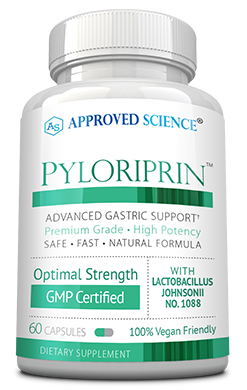
While Approved Science only launched Pyloriprin last year, customers are already loving it! Here’s what users had to say about it:
“Success!! After being diagnosed with H Pylori a year ago, I did some mad research about natural ways to combat it. I read reviews on several supplements, and this one especially had some very good reviews, so I decided to give it a try. After 3 months of taking this supplement religiously, my symptoms were gone, and my labs came back clear! Quality ingredients and effective results! Highly recommend!” -Anonymous Amazon Customer
“I notice a difference in my stomach issues after being on this for a few days.” – Linda Pope
“It is helping my stomach, I have realized that I have less bloating and burping since I have been taking this supplement.” – Femina Sadiwala
What Should I Do If I Think I Have H. Pylori?
Step 1. Talk to your doctor about your symptoms and ask to test for H. Pylori.
Step 2: If you have been diagnosed with H. Pylori, discuss your options with your doctor.
Step 3: If, and only if your doctor approves, order Pyloriprin from Approved Science and take two capsules daily (one in the morning and one in the afternoon) 30 minutes before meals and with a full glass of water.