
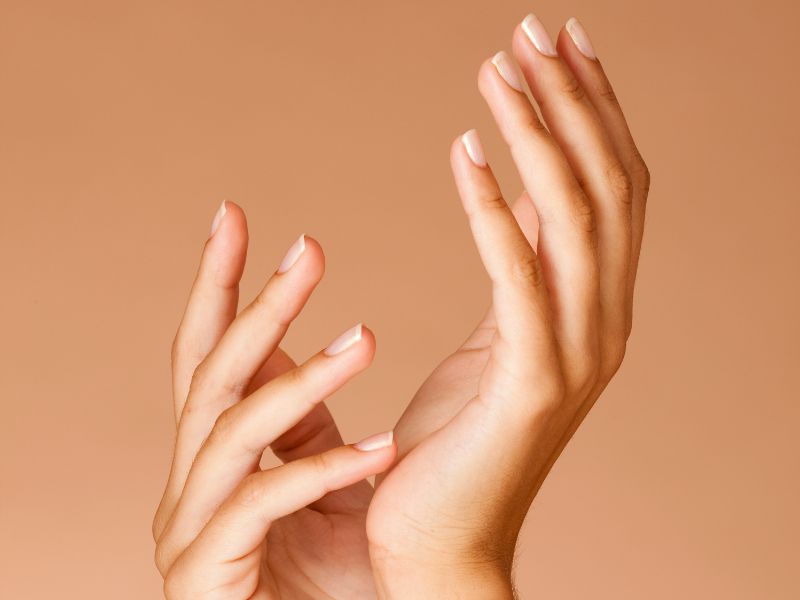
Brittle, peeling, or breaking nails are more than just a cosmetic annoyance. They snag on clothes, chip right after a fresh manicure, and split just when they’ve finally grown out. Beyond how they look, nails protect the sensitive tips of your fingers, so when they’re not at their best, you feel it.
The good news? By combining smart daily habits with the right internal and external support, you can foster nails that don’t just look great, but stay resilient against everyday wear and tear.
Your Nails Are Talking To You
Nails serve as a protective barrier for your fingertips, and their appearance can offer clues about your internal well-being. Ridges, paleness, or brittleness can sometimes point to nutritional deficiencies. While most issues are minor, paying attention to these changes can help you catch early signs of imbalance in your body.
7 Steps to Resilient, Healthy Nails
1. Keep Nails Clean and Dry
Moisture and bacteria are a risky mix for nail health. Keeping your nails clean and dry helps reduce the risk of fungal and bacterial infections (1,2). If your hands are often in water, such as when washing dishes, wearing gloves is an essential protective step.
2. Moisturize with Purpose
Nails and cuticles need deep hydration to stay flexible and resist splitting. While standard lotions help, a targeted treatment provides deeper benefits.
Pro Tip: Look for ingredients like Aloe Vera for its regenerative qualities (3) and Lavender oil, which helps boost collagen production (4). Applying a serum like Approved Science® Nail Protein twice daily allows these nutrients to penetrate the nail surface, using Glycerin and Lecithin to lock in moisture and prevent brittleness.
3. Support from the Inside Out
Nails are primarily made of a protein called keratin. While topical treatments protect the existing nail, long-term strength starts from within. Your diet is part of your nail care. Essential nutrients like Biotin, Zinc, and Iron are essential for building healthy nail structures (5,6,7). If your diet isn’t providing enough, a high-potency supplement like Approved Science® Hair, Skin & Nails can bridge the gap. It also features a B-Sci™ Full Spectrum Vitamin B Complex and Marine Collagen Peptides to stimulate keratin production and increase the rate of nail growth.
4. Be Gentle With Grooming
Always use clean, sharp clippers and cut nails straight across. When filing, move in one direction rather than “sawing” back and forth, which can weaken the nail layers. Additionally, avoid picking at your cuticles, as this can cause damage and open the door to infection.
Struggling with nail fungus? Fungix can help! Learn more.
5. Limit Harsh Chemicals
Frequent use of acetone or repeated gel manicures can leave nails thin and prone to peeling. When your nails feel stripped, they need “reconstructive” ingredients.
How to Repair: Hydrolyzed proteins. Specifically Wheat, Oat, and Soybean proteins bind with the natural keratin in your nails to repair damage and add a protective barrier (8,9,10). For this reason, these are key components in the Approved Science® Nail Protein formula.
6. Take a “Recovery Break”
Constant polish can lead to discoloration and weakness. Try at least a week of naked nails between manicures to allow them to recover. During this time, utilize a strengthening serum to help fortify the nail composition and reduce the risk of infections.
7. Don’t Ignore Warning Signs
If your nails suddenly become discolored, painful, or begin lifting from the bed, consult a healthcare provider. Sudden changes shouldn’t be ignored, especially as they may signal deficiencies or a need for increased oxygen supply or cellular protection.
The Bottom Line
Strong, smooth nails are a result of both what you put on them and what you put in your body. By pairing a targeted topical like Approved Science® Nail Protein with an internal boost from Approved Science® Hair, Skin & Nails, you provide the full spectrum of vitamins, minerals, and proteins needed for lasting resilience and a healthy, polished look.