

When you have IBS, food can start to feel like the prime suspect every time symptoms appear. While diet absolutely can influence IBS symptoms, what you eat is only one part of the picture.
IBS is characterized as a disorder of gut-brain interaction. That means symptoms can be influenced by the way your digestive system, nervous system, brain, and even some of the muscles involved in digestion communicate with one another.
So if your symptoms sometimes seem impossible to explain based on what you ate, there may be other factors worth looking at before you blame your diet.
1. Stress and Anxiety Can Show Up in Your Gut
Think about what happens before a major presentation, difficult conversation, or stressful trip. For some people, the first sign of stress isn’t a racing heart. It’s their stomach. They may suddenly feel cramping, bloating, nausea, or an urgent need to find a bathroom.
The reason this happens is because the brain and digestive tract constantly exchange signals. In IBS, this communication can become unusually sensitive, which may affect pain perception, bowel movements, and how strongly you experience normal sensations inside your digestive system.
This does not mean IBS is “just anxiety” or that the symptoms are in your head.
In fact, the American College of Gastroenterology recommends gut-directed psychological therapies, including gut-directed hypnotherapy and yoga and meditation, as legitimate options for improving overall IBS symptoms (1).
It also means that if you notice your gut tends to act up before deadlines, travel, social events, or other stressful situations, that pattern may be worth tracking alongside your food.
>>> Dealing with anxiety? Anxietex could be the key to feeling calmer. Don’t miss our Anxietex Reviews!
2. Are You Unconsciously Holding Your Stomach In?
Here’s one factor that rarely appears on an IBS food-trigger list. Do you spend much of the day sucking in or tightening your stomach? Many people do it so habitually that they no longer realize they’re doing it.
Repeatedly gripping the upper abdominal muscles has sometimes been called “hourglass syndrome.” Chronic stomach gripping can alter normal abdominal muscle patterns, affect diaphragmatic breathing, increase pressure inside the abdomen, and influence the pelvic floor.
For someone who already experiences bloating or abdominal discomfort, keeping the stomach clenched all day may be one more source of unnecessary tension. Try noticing what your abdomen is doing while you’re working, driving, standing in line, or feeling self-conscious about bloating.
If you’re constantly “sucking it in,” allowing your abdomen to relax and practicing normal diaphragmatic breathing may be worth discussing with a physical therapist or other qualified healthcare professional.
3. The Problem May Sometimes Be How Your Muscles Are Working
This is particularly relevant if your IBS includes constipation, straining, or the feeling that you haven’t completely emptied your bowels. Going to the bathroom requires several muscles to work together. Your abdominal muscles generate pressure while the pelvic-floor muscles around the rectum need to relax at the right time.
In some people, those muscles don’t coordinate properly. This is known as pelvic-floor dyssynergia.
Research has found pelvic-floor dyssynergia in some people with non-diarrhea-predominant IBS, and researchers suggest that treatments such as biofeedback may be useful for selected patients (2).
This is an important distinction because repeatedly changing your diet or adding more fiber won’t necessarily solve a muscle-coordination problem.
If constipation remains difficult despite reasonable dietary changes, especially if you strain frequently or regularly feel incompletely emptied, it may be worth asking a gastroenterologist whether pelvic-floor function should be evaluated.
Bonus: For Women, Your Cycle May Change the Pattern
Sometimes the same meal feels perfectly fine one week and much less fine another. For women with IBS, hormonal changes throughout the menstrual cycle may help explain some of that variation.
Research has found that gastrointestinal symptoms can change across the menstrual cycle, and women with IBS often report greater symptom burden around menstruation (3). This can affect symptoms such as abdominal discomfort, bloating, constipation, and bowel habits. So before permanently eliminating another food because it seemed to “cause” a flare once, it can be useful to look at when in your cycle the symptoms occurred. Patterns become much easier to spot when you track the whole picture.
Stop Looking for One Perfect IBS Trigger
One of the most frustrating things about IBS is that there may not be one simple answer.
You may tolerate a food perfectly well on a relaxed Saturday after a good night’s sleep, then struggle with the same meal on a stressful Wednesday when you’re exhausted, sitting all day, and unconsciously tensing your abdomen. That doesn’t mean food doesn’t matter. It means your gut doesn’t exist in isolation from the rest of your body. And that’s why managing IBS often works better when you stop searching for one culprit and start building a broader support plan.
What Can You Do When You Can’t Control Every Trigger?
You can work on stress. You can stop gripping your stomach. And if pelvic-floor dysfunction is part of the problem, you can seek appropriate treatment. But realistically, you aren’t going to eliminate every stressful day, sleep perfectly every night, or control every change in your routine.
That’s why Irritab was created to support your IBS management.
Approved Science® Irritab™ was formulated specifically to support people dealing with common IBS-related digestive complaints, including bloating, abdominal discomfort, gas, fullness, irregular bowel movements, and difficult digestion.
Rather than relying on one ingredient, Irritab combines several forms of digestive support in one formula. Psyllium provides soluble fiber to help support healthy stool formation and bowel regularity, while peppermint helps promote digestive comfort and normal intestinal muscle function. Ginger adds support for nausea and digestive upset, while fennel helps address gas, bloating, and feelings of fullness. The formula also contains a blend of 10 digestive enzymes designed to help break down fats, proteins, dairy, and carbs during digestion. Together with the formula’s other botanicals, these ingredients provide broader support for everyday digestive comfort and regularity.
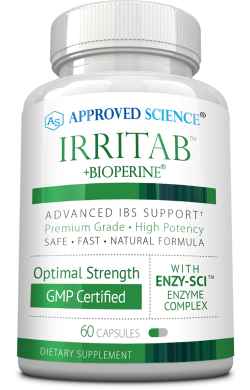
>>> Try Approved Science® Irritab for Daily Digestive Support
The Bottom Line
If you have IBS, it’s easy to develop tunnel vision around food. But your last meal isn’t the only thing your gut responds to. Stress, sleep, abdominal tension, pelvic-floor coordination, physical activity, and hormonal changes can all affect the bigger picture.
Start looking for patterns rather than automatically blaming the last thing you ate. You might discover that the missing piece of your IBS routine wasn’t another food restriction at all.
And because you can’t control every factor every day, a broader approach that combines healthy habits with targeted digestive support may make far more sense than spending your life trying to create the perfect IBS diet.