
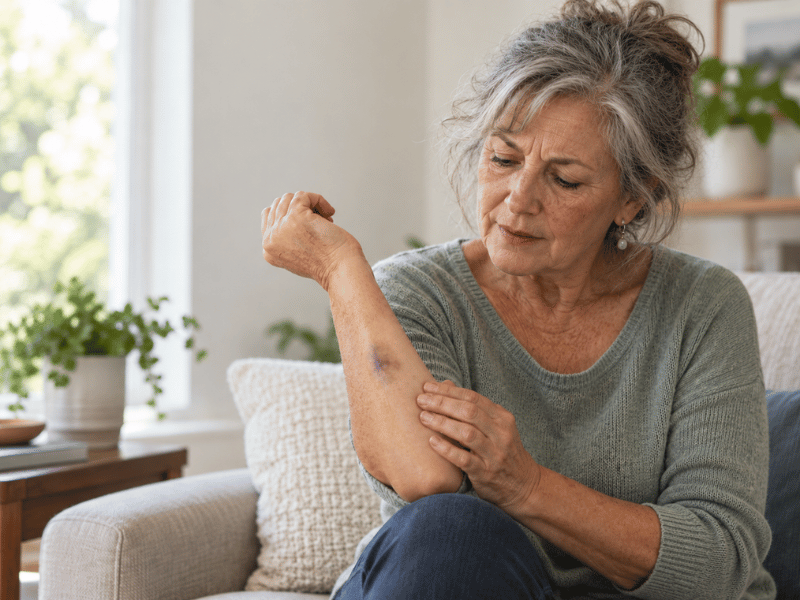
Have you noticed that bruises seem to appear more easily than they used to? Perhaps you’ve discovered a large purple mark on your arm without remembering how it got there, or a small bump against the furniture has left a bruise that seems to take forever to disappear.
If this sounds familiar, you’re not alone. Bruising becomes increasingly common as we age, and those colorful marks can sometimes linger longer than we expect. But why does this happen? Is your body becoming less efficient at healing itself, or is something else going on?
The answer has a lot to do with changes happening just beneath your skin. As you get older, your skin loses some of the structures that protect your blood vessels from everyday bumps and knocks. Understanding these changes can help explain why bruises become more noticeable with age and what you can do to protect your skin.
What Actually Happens When You Get a Bruise?
A bruise forms when small blood vessels called capillaries break beneath the skin, usually following a bump or injury. Blood leaks from the damaged vessels into the surrounding tissue, creating the familiar red, purple, or blue discoloration. Your skin itself may remain completely intact, but the bleeding underneath produces a visible mark.
Once this happens, your body begins the process of clearing away the escaped blood. As red blood cells break down, the pigments they contain change, which explains why bruises often turn from purple or blue to green, yellow, or brown before disappearing. These color changes are part of the normal healing process, although not every bruise follows exactly the same pattern.
Most ordinary bruises fade within about two weeks, but larger or deeper bruises can take longer. According to the Mayo Clinic, healing may also take longer with age (1). However, the increased visibility and persistence of bruises in older adults isn’t simply a matter of slower healing. Aging also changes how easily bruises form in the first place.
Why Aging Makes Bruising More Common
One of the biggest changes involves your skin itself. When you’re younger, your skin contains a relatively strong network of collagen and other structural proteins that help it remain firm and resilient. A layer of fatty tissue beneath the skin also provides cushioning, helping protect the small blood vessels underneath from minor impacts.
Over time, the skin becomes thinner, collagen levels decline, and some of that protective fat disappears. As a result, blood vessels have less support and are more vulnerable to injury. A bump that might not have left any visible mark when you were younger can now cause enough damage to produce a noticeable bruise. (1, 2)
This helps explain why older adults frequently develop bruises on their hands and forearms. These areas are regularly exposed to minor knocks, and the skin covering them may become particularly thin with age. Years of sun exposure can make the problem worse because ultraviolet radiation gradually damages the skin’s supporting structures.
There’s even a name for a common type of age-related bruising: actinic purpura, sometimes called senile purpura. It typically appears as irregular purple patches on the hands and forearms, often after an injury so minor that the person doesn’t remember it happening. These marks may take one to three weeks to disappear and can sometimes leave behind brownish discoloration. (3)
Although senile purpura is usually harmless, it illustrates how dramatically the skin’s protective abilities can change over time. And because age-related skin fragility can also affect tissue repair, some older adults find that bruises remain visible longer than they did in earlier years.
Could Something Else Be Making You Bruise Easily?
Aging is a common explanation for increased bruising, but it isn’t the only one. Certain medications, nutritional deficiencies, and medical conditions can also make bruises appear more frequently or become more pronounced.
Blood-thinning medications are one important example. Medicines such as warfarin and apixaban reduce the blood’s ability to form clots, while aspirin and some other medications affect how platelets function. These medicines can be essential for preventing dangerous blood clots, but they may also allow more blood to escape into surrounding tissues following a minor injury. Additionally, corticosteroids can contribute to bruising through a different mechanism by making the skin thinner and more fragile. (1)
Nutrition matters too. Vitamin C is necessary for collagen production, which helps maintain the structure of the skin and blood vessels. Vitamin K supports normal blood clotting, while vitamin B12 plays an important role in healthy blood cell production. Significant deficiencies in these nutrients can contribute to bruising problems, although they are not necessarily the cause of everyday bruises. (4)
What Can You Do to Help Bruises Heal?
Unfortunately, there’s no way to make a bruise disappear immediately. Once blood has leaked into the surrounding tissue, your body needs time to break it down and clear it away. However, there are practical steps you can take to limit swelling, support comfort, and protect the affected area while it recovers.
For a new bruise caused by a minor injury, applying a cold compress may help reduce swelling. Wrap an ice pack in a towel and hold it against the affected area for about 10 to 15 minutes at a time during the first 24 to 48 hours. If possible, elevating the bruised area may also help limit swelling. After the first couple of days, gentle warmth may help with comfort as the area recovers. (5)
Taking care of your skin between injuries is equally important, particularly as you get older. Regular moisturizing and collagen supplementation can help maintain the skin’s moisture barrier, while sun protection helps limit further damage to the collagen and supporting tissues beneath the surface. Wearing protective clothing during activities that frequently cause bumps can also reduce the chance of developing new bruises.
Some people also turn to topical products formulated specifically for bruised skin. One ingredient that has attracted research interest is arnica, a flowering plant traditionally used in topical preparations for minor bruising and swelling. A randomized trial published in the British Journal of Dermatology found that a topical preparation containing 20% arnica helped improve the appearance of bruises. However, other studies have found less encouraging results and more research is required. (6, 7)
Giving Bruised Skin Some Extra Care
While your body handles the process of clearing a bruise, the surrounding skin may also benefit from gentle care, particularly when aging has left it feeling thinner, drier, or more delicate.
Approved Science® Bruise Cream was developed with this in mind. Its formula combines 10% standardized Arnica Montana Extract with skin-nourishing ingredients such as Hemp Seed Oil, Avocado Oil, and Vitamin E. These ingredients have been selected for their potential soothing and skin-conditioning properties, helping provide a targeted approach to caring for skin affected by minor bumps and bruises.
Arnica is the formula’s primary botanical ingredient and has been studied for its potential effects on bruising and swelling. Meanwhile, the plant oils help moisturize and condition the skin, which can be especially beneficial when age-related dryness and fragility are concerns. The formula also contains ingredients that provide a cooling, soothing sensation, offering additional comfort when the affected area feels tender.
Learn more about the formula behind Approved Science® Bruise Cream.
When Should You Be Concerned About Bruising?
An occasional bruise after bumping into something is generally nothing to worry about. However, bruising shouldn’t automatically be dismissed as a normal part of aging, particularly when there’s a sudden or unexplained change.
If you begin developing unusually large bruises, notice frequent bruising without an obvious cause, or experience additional bleeding symptoms such as frequent nosebleeds or bleeding gums, it’s worth speaking with a healthcare professional. Bruising on areas such as the chest, abdomen, back, or face without a clear injury also deserves attention. (1)
Your doctor may review your medications, assess your skin, and recommend blood tests to check platelet levels or clotting function. Identifying an underlying cause is important because a bruise cream or dietary supplement cannot correct a bleeding disorder or medication-related problem.
The Bottom Line
Bruising more easily as you age can be frustrating, particularly when a minor bump leaves a mark that seems to linger for weeks. But these changes are often explained by what happens to the skin over time. As collagen and protective fat decline, the small blood vessels beneath your skin become more exposed to everyday impacts, making bruises easier to develop and sometimes slower to disappear.
Although you can’t completely prevent these changes, protecting your skin from sun damage, maintaining good nutrition, and taking sensible precautions against minor injuries can all help. Gentle skin care and suitable topical products may also provide comfort while your body completes its natural recovery process.
Most importantly, pay attention to changes in your bruising patterns. An occasional bruise is usually harmless, but persistent or unexplained bruising deserves a closer look. Understanding the difference can help you care for your skin confidently as you age.